Summer on Daniel Island: Island Living at Its BestIntroduction Summer on Daniel Island captures everything people love about Lowcountry living—outdoor recreation, waterfront access,

Dated: February 24 2026
Views: 1421
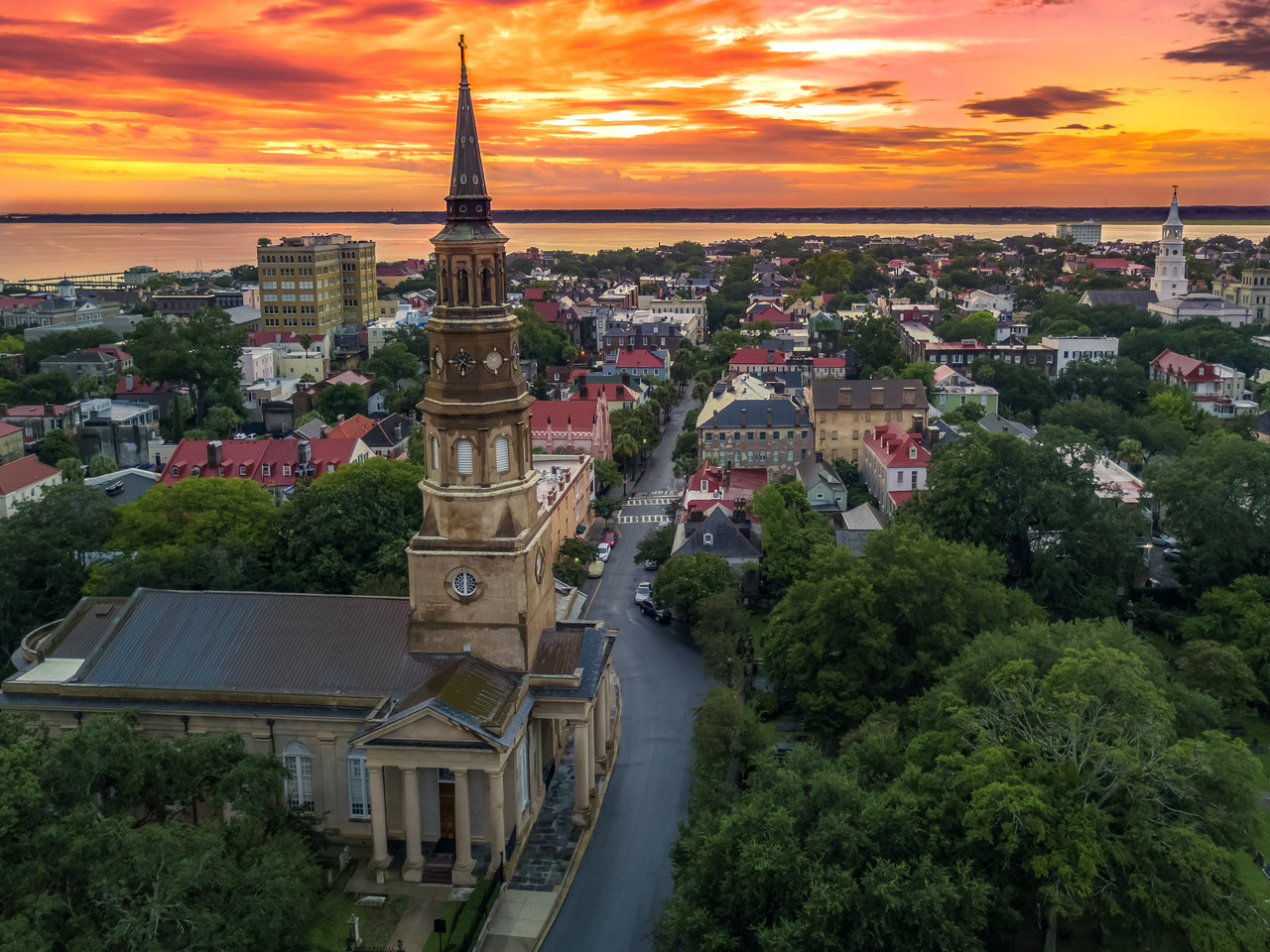
Charleston is one of the oldest cities in the United States, and with more than 350 years of history, it is a place where fact, folklore, and legend naturally intertwine. Walk its streets long enough and you begin to realize that Charleston’s identity is shaped not only by architecture and geography, but by the stories that have been passed down through generations. Some are well-documented moments in American history, while others are legends that grew richer with each retelling.
From a nearly black shade of green found on doors and shutters, to pastel homes lining the harbor, to earthquakes, church bells, and ghostly encounters, Charleston’s stories offer a deeper understanding of the city’s character. These narratives explain why the city looks the way it does, why certain traditions endure, and why Charleston feels unlike anywhere else. This guide brings together many of the most enduring Charleston stories and legends—both celebrated and mysterious—into one complete account.
If Charleston has an unofficial color, it is Charleston Green. This extremely dark hue—often mistaken for black—can be found throughout the historic district on shutters, doors, iron gates, and trim. While no single origin story has been definitively proven, one of the most popular legends dates back to the aftermath of the Civil War.
According to local lore, Union forces sent black paint to Charleston to help cover war damage. Rather than use what was sometimes referred to as “Yankee black,” residents mixed yellow pigment into the paint, creating a dark green shade that appeared black at night but revealed its color in daylight. Whether symbolic resistance or practical adaptation, the color endured and became a defining visual element of the city. Today, Charleston Green represents subtle elegance, resilience, and quiet distinction—values deeply woven into the city’s identity.
In 1791, President George Washington embarked on a goodwill tour of the southern states, fulfilling a promise made during his inauguration to unite the young nation. His journey took him through Maryland, Virginia, North Carolina, South Carolina, and Georgia, accompanied by an entourage of aides and horses.
Charleston, then the fourth-largest city in the United States with a population exceeding 16,000, hosted Washington for a full week. He was greeted with celebrations, formal gatherings, and public events, many of which were carefully documented. Washington made a point of riding into cities on horseback rather than arriving by carriage, understanding the power of symbolism and presence.
In his personal journal, Washington wrote with admiration about Charleston society, particularly noting a concert attended by hundreds of women whose number and appearance exceeded anything he had seen before. Even in the 18th century, Charleston was known for refinement, hospitality, and civic pride.
Few symbols are more closely associated with Charleston than the pineapple. It appears throughout the city in architectural details, garden gates, ironwork, and most famously in the Pineapple Fountain at Waterfront Park. The fruit’s connection to hospitality is deeply rooted in maritime tradition.
Legend suggests that in the era of transatlantic trade, sailors returning home from long voyages would place a pineapple outside their door to signal safe arrival and welcome guests. Because pineapples were rare and exotic, offering one represented generosity and warmth. Over time, the fruit became a universal symbol of hospitality—one that Charleston embraced wholeheartedly.
Today, the pineapple reflects the city’s long-standing reputation for gracious living and warm welcome, values that continue to define Charleston’s culture.
Rainbow Row is one of Charleston’s most iconic landmarks—a stretch of thirteen pastel-colored historic homes along East Bay Street between Tradd and Elliott Streets. Built largely in the late 18th century, many of the structures replaced buildings destroyed in the Great Fire of 1787.
A romantic legend claims the homes were painted in bright colors so sailors returning from sea could identify their houses from the harbor. While charming, the truth is more modern. In the 1930s and 1940s, preservationist Dorothy Porcher Legge restored several of the buildings and selected Caribbean-inspired colors. Other homeowners followed her lead, creating the cohesive and colorful streetscape seen today.
Rainbow Row stands as both a visual symbol of Charleston and an early example of historic preservation done thoughtfully and creatively.
Charleston’s architecture bears subtle reminders of one of its most dramatic natural disasters—the earthquake of 1886. With an estimated magnitude near 7.0, it remains one of the strongest earthquakes ever recorded on the East Coast.
In the aftermath, builders installed long iron rods through many surviving masonry structures to stabilize them. The ends of these rods are visible on building exteriors, often disguised with decorative iron shapes such as stars, circles, S-curves, and crosses. These “earthquake rods” allowed Charleston to reinforce its buildings without sacrificing aesthetics.
Today, they serve as a quiet reminder of the city’s resilience and its ability to adapt while preserving beauty.
St. Michael’s Church, located at the intersection of Broad and Meeting Streets, is one of Charleston’s most recognizable landmarks. Its bells have endured an extraordinary journey spanning centuries, wars, and natural disasters.
Originally installed in the 18th century, the bells were stolen by British forces during the Revolutionary War, later returned, and then sent to Columbia for safekeeping during the Civil War. When Columbia burned, the bells were damaged and eventually shipped to London to be recast. Improper installation prevented them from fully ringing for more than a century.
After Hurricane Hugo in 1989, the bells were once again sent to London, restored, and reinstalled on a proper frame in 1993. They finally rang as intended—an audible symbol of Charleston’s perseverance and dedication to restoration.
Charleston was a pioneer in historic preservation. In 1920, Susan Pringle Frost and a group of civic-minded citizens founded what became the Preservation Society of Charleston—the first community-based historic preservation organization in the United States.
Their initial goal was to save the Joseph Manigault House from demolition. The success of that effort led to broader initiatives, including the nation’s first historic zoning ordinance in 1931. These efforts protected not only individual buildings, but entire neighborhoods, ensuring Charleston’s architectural integrity for future generations.
The Preservation Society remains active today, continuing to shape Charleston’s urban landscape with a balance of protection and progress.
No discussion of Charleston legends would be complete without its ghost stories. The city’s age, combined with centuries of wars, fires, earthquakes, duels, and epidemics, has fueled countless tales of lingering spirits.
Pirates imprisoned in the Old Exchange and Provost Dungeon are said to still wail at night. Dock Street Theatre is believed to be haunted by spirits connected to the fire that destroyed the original building in the 18th century. Philadelphia Alley carries stories of fatal duels and restless souls.
Some attribute Charleston’s paranormal reputation to its proximity to the 33rd parallel north, long associated with supernatural activity. Whether believed or simply enjoyed as folklore, ghost stories add a mysterious layer to Charleston’s already rich history.
Charleston’s stories and legends are more than entertaining tales—they are windows into the city’s soul. From colors and symbols to earthquakes, bells, preservation, and ghostly whispers, these narratives reveal how Charleston has endured and evolved without losing its identity.
Understanding these stories helps explain why Charleston feels so distinct and why its neighborhoods carry such lasting appeal. History here is not hidden behind museum walls; it lives in the streets, buildings, and traditions that shape daily life.
If you’re considering buying or selling a home in Charleston, understanding the city’s past is just as important as understanding the market. The stories behind the streets often explain why certain areas remain timeless and desirable.
Kenton Selvey
William Means Real Estate
📞 843-806-7222
📧 kenton@williammeans.com

Kenton SelveyLuxury Real Estate Advisor | William Means Real EstateA leader in Charleston’s luxury real estate market, Kenton Selvey delivers cutting-edge marketing, expert financial analysis, a....
Summer on Daniel Island: Island Living at Its BestIntroduction Summer on Daniel Island captures everything people love about Lowcountry living—outdoor recreation, waterfront access,
Charleston Stories and Legends: The History Beneath the CobblestonesIntroductionCharleston is one of the oldest cities in the United States, and with more than 350 years of history, it is a place
Charleston Area Beaches: A Complete Guide to the Lowcountry CoastIntroductionCharleston is known for its historic charm, award-winning food scene, and coastal lifestyle—but its beaches are
The Old Village in Mount Pleasant: History, Homes, and LifestyleIntroductionThe Old Village is one of Mount Pleasant’s most established and sought-after neighborhoods, offering a rare blend of
 The data relating to real estate for sale on this web site comes in part from the Broker Reciprocity Program of Charleston Trident Association of REALTORS® -- All information deemed reliable but not guaranteed. All properties are subject to prior sale, change or withdrawal. Neither listing broker(s) or information provider(s) shall be responsible for any typographical errors, misinformation, misprints and shall be held totally harmless. Listing(s) information is provided for consumer's personal,
non-commercial use and may not be used for any purpose other than to identify prospective properties consumers may be interested in purchasing. The data relating to real estate for sale on this website comes in part from the Internet Data Exchange program of the Multiple Listing Service. Real estate listings held by brokerage firms other than Kenton Selvey | William Means Real Estate may be marked with the Internet Data Exchange logo and detailed information about those properties will include the name of the listing broker(s) when required by the MLS. Copyright ©2026 All rights reserved.
Last Updated: September 23, 2026 1:26 AM UTC
Show More...
The data relating to real estate for sale on this web site comes in part from the Broker Reciprocity Program of Charleston Trident Association of REALTORS® -- All information deemed reliable but not guaranteed. All properties are subject to prior sale, change or withdrawal. Neither listing broker(s) or information provider(s) shall be responsible for any typographical errors, misinformation, misprints and shall be held totally harmless. Listing(s) information is provided for consumer's personal,
non-commercial use and may not be used for any purpose other than to identify prospective properties consumers may be interested in purchasing. The data relating to real estate for sale on this website comes in part from the Internet Data Exchange program of the Multiple Listing Service. Real estate listings held by brokerage firms other than Kenton Selvey | William Means Real Estate may be marked with the Internet Data Exchange logo and detailed information about those properties will include the name of the listing broker(s) when required by the MLS. Copyright ©2026 All rights reserved.
Last Updated: September 23, 2026 1:26 AM UTC
Show More...
